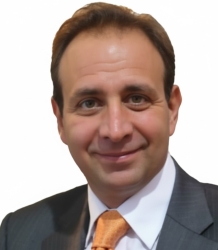

The landscape of modern business is often described through the cold lens of logistics, supply chains, and digital infrastructure. We speak of “interconnectedness” as if it were merely a series of fiber-optic cables stretching across ocean floors. However, a recent masterclass held at the Universidad Científica del Sur in Lima served as a powerful reminder that globalization is not just a structural phenomenon; it is a profoundly human one. Invited by Director César Ordóñez Zúñiga, the session moved beyond theoretical frameworks to explore the heart of international management: people.
In an era where the term “globalization” is frequently debated—sometimes viewed as a threat to local identity and other times as a panacea for economic growth—the dialogue in Lima focused on a more nuanced reality. It is about the synergy of individuals who collaborate, interact, and generate impact that transcends national borders.
The New Architecture of Global Business
Traditionally, international business was the playground of massive multinationals. Today, the barriers to entry have crumbled. A student in Lima can launch a startup that serves clients in Seoul, Berlin, and Nairobi simultaneously. This shift has fundamentally changed what we teach the next generation of leaders.
During the masterclass, the focus was not solely on how to navigate customs or manage currency fluctuations. Instead, the conversation centered on the collaborative mindset. In a world that is more connected yet more complex than ever, the ability to work across cultures is the ultimate competitive advantage. This requires more than just technical proficiency; it requires empathy, cultural intelligence, and a commitment to shared value.
When we talk about global impact, we are talking about the ripple effect of local ideas. The students at Universidad Científica del Sur embody this shift. They aren’t just learning how to exist within a global market—they are learning how to shape it.
From Theory to Tangible Action
The most inspiring aspect of any educational exchange is the moment a theoretical concept transforms into a lived project. Listening to the students in Lima, it became clear that the next generation of entrepreneurs does not see “international” as a far-off goal to be achieved after years of local growth. For them, international is the starting point.
Their projects reflected a sophisticated understanding of global challenges, from sustainable development to digital equity. What stood out was their “vision into action” approach. There is a common misconception that students are merely passive recipients of knowledge. On the contrary, these young minds are active architects of the future. Their questions weren’t just about “how things work,” but “how things can work better.”
This transition from idea to action is the essence of modern entrepreneurship. It is the courage to take a concept born in a classroom in Peru and apply it to a problem that exists halfway across the globe. By fostering this spirit, institutions like Universidad Científica del Sur are doing more than awarding degrees; they are incubating global change-makers.
The Power of Curiosity and Cooperation
At its core, globalization is fueled by two fundamental human traits: curiosity and cooperation.
Curiosity is the engine of innovation. It is what drives a student to look beyond their immediate surroundings and ask, “How do they do this in Japan?” or “What can I learn from the social enterprises in Scandinavia?” Without this restlessness, business becomes stagnant and parochial. In Lima, that curiosity was palpable. It manifested in a hunger for new perspectives and a willingness to challenge established norms.
Cooperation, on the other hand, is the vehicle for progress. No great global achievement—whether it’s a medical breakthrough, a technological leap, or a sustainable business model—happens in isolation. The masterclass underscored that “globalized” does not mean “homogenized.” Rather, it means a world where our differences become our greatest strengths when we choose to cooperate.
When we share knowledge, we don’t lose it; we multiply it. The act of teaching is a two-way street. While the masterclass provided a platform to share expertise on international management, the students provided a fresh perspective on resilience and creativity. They reminded us that while the tools of business change, the need for human connection remains constant.
The Road Ahead: Why Education Matters
The future of international business depends on the quality of the conversations we have today in our universities. Education is the bridge that connects local talent to global opportunity. By bringing industry insights into the academic environment, we help bridge the gap between “knowing” and “doing.”
The invitation from César Ordóñez Zúñiga highlights a vital trend in higher education: the integration of real-world global perspectives into the curriculum. This ensures that when students graduate, they aren’t just entering the workforce; they are entering a global community. They leave with the understanding that their impact isn’t limited by the borders of Peru, but expanded by the possibilities of the world.
Conclusion: A Connected Future
As we look toward the future of global trade and international relations, it is easy to get lost in the macro-trends of geopolitics and economics. But as the experience at Universidad Científica del Sur proved, the most important work is happening at the micro-level—in the classrooms, in the coffee-shop brainstorms, and in the collaborative projects of ambitious students.
Globalization is often criticized for being impersonal, but it is actually built on the most personal of foundations: the desire to learn, the drive to build, and the hope for a better, more integrated world. It was a privilege to witness the first steps of these future leaders. Their journey is a reminder that as long as we maintain our curiosity and our commitment to cooperation, the borders that once divided us will continue to become the bridges that unite us.
In the end, we are all part of the same global narrative. Whether we are seasoned professionals or students just starting out, we are all learning to navigate this interconnected world together. And if the energy in Lima is any indication, the future of global business is in very capable hands.