

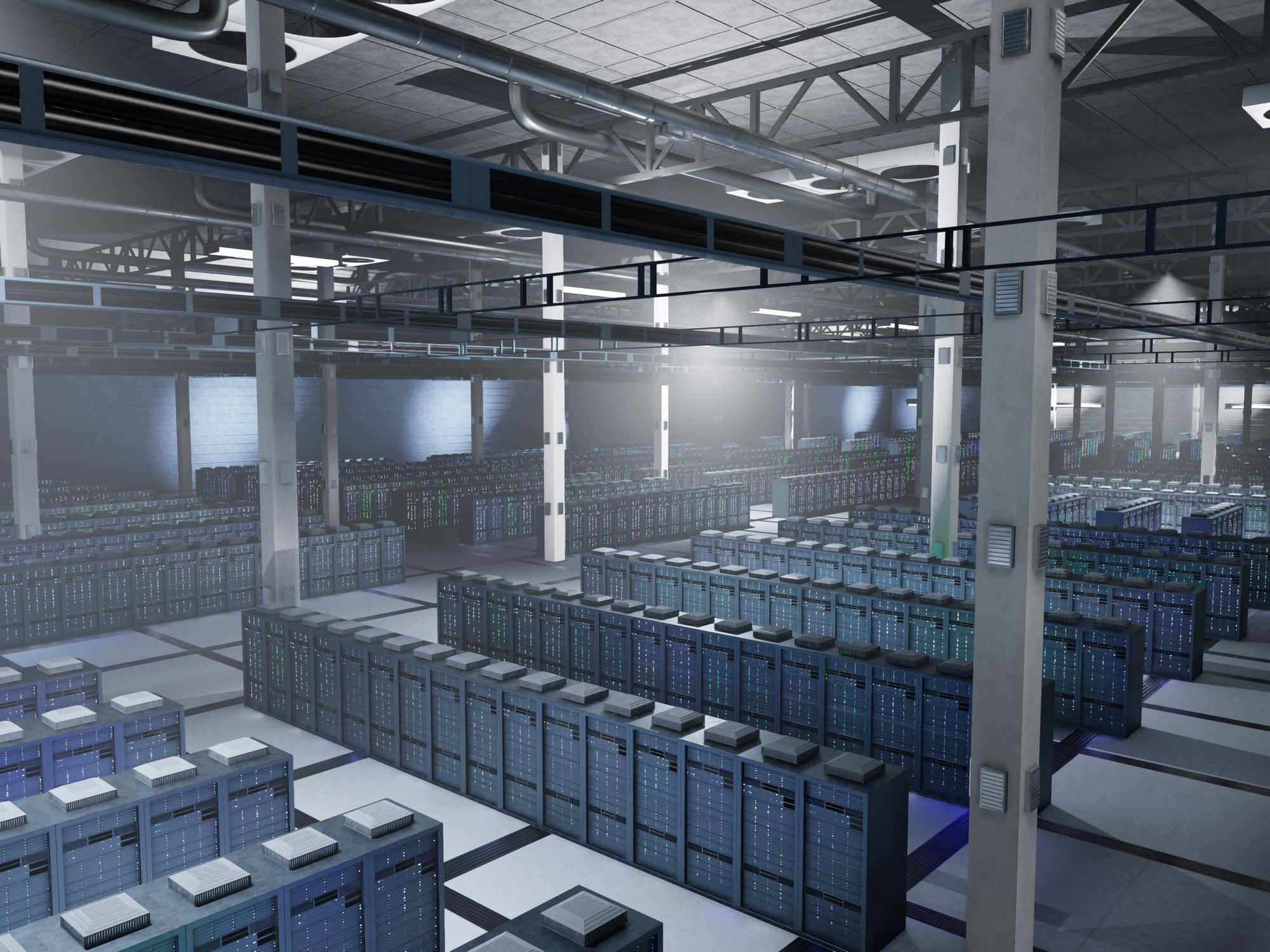
Across the American landscape, a quiet re-industrialization is underway. In the humid flatlands of Loudoun County, Virginia, outside Phoenix’s arid sprawl, and across the cornfields of central Ohio, windowless concrete behemoths are rising at a pace unseen since the interstate highway boom. These are the physical bastions of the digital era: hyperscale data centers.
Long relegated to a specialized niche within commercial real estate, data centers have vaulted to the center of global capital markets. Driven by the explosive compute demands of generative artificial intelligence, high-performance computing, and enterprise cloud migrations, institutional investors have poured hundreds of billions of dollars into domestic server halls. Yet behind the seductive narrative of limitless silicon-driven growth lies a harsher operational reality. Investing in American data centers is no longer an exercise in commercial leasing; it is fundamentally an exercise in navigating power bottlenecks, regional grid friction, and mounting capital expenditure risks.
The Siren Call of Structural Demand
The fundamental investment thesis remains undeniably compelling. Compute has evolved into a fifth utility, as essential to modern commerce as water, gas, electricity, and telecommunications. Every major economic sector—from drug discovery and financial engineering to generative media and automated defense—now demands unprecedented throughput.
For institutional allocators, real estate investment trusts (REITs), and private equity giants, data centers have historically presented an enviable financial profile: sticky, creditworthy tenants (namely Microsoft, Amazon, Google, and Meta), long lease durations extending 10 to 15 years, and attractive yields that outshine stagnant commercial office portfolios. Because the software world moves at breakneck speed while physical construction moves at the pace of concrete curing, supply has trailed demand for quarters on end. In tier-one markets, vacancy rates hover near structural lows, creating pricing power and rent appreciation that real estate developers previously thought impossible.
Yet capital markets have a habit of confusing structural demand with effortless execution. The easy phase of the digital infrastructure trade—buying land, constructing shell buildings, and plugging into the municipal substation—is definitively over.
The Hard Limits of Physics: The Power Chokepoint
The primary governor on data center growth today is not tenant demand, silicon availability, or access to venture debt; it is physics.
A traditional enterprise data center historically operated on 10 to 30 megawatts (MW) of power. Today’s hyperscale AI campuses routinely require 300 to 500 MW, with next-generation multi-facility clusters targeting a gigawatt—energy consumption on par with mid-sized American cities.
This sudden surge has collided head-on with an aging, fragmented American electrical grid. In Northern Virginia’s “Data Center Alley,” through which an estimated 70% of the world’s internet traffic passes, utilities like Dominion Energy have warned that transmission infrastructure cannot keep pace with proposed interconnect requests. Lead times for high-voltage transformers and specialized switchgear now stretch past three to four years.
As a result, the investment calculus has inverted. In commercial real estate, the golden rule has always been location, location, location. In the modern data center market, that mantra has been replaced by speed to power.
Capital is fleeing saturated legacy hubs in favor of emerging secondary and tertiary geographies where regional utilities have surplus capacity. Regions like the Electric Reliability Council of Texas (ERCOT) footprint, the Pacific Northwest, and parts of the Midwest have witnessed land-grab dynamics reminiscent of nineteenth-century railroad expansion. Savvy developers are no longer simply securing zoning permits; they are negotiating behind-the-meter generation, striking power purchase agreements for nuclear and geothermal energy, and exploring on-site natural gas microturbines to bypass grid connection queues. If an asset cannot guarantee energized racks within a predictable operational timeline, its projected net operating income is mere fiction.
Thermal Density and the Obsolescence Trap
Even when power is secured at the substation fence, deploying it inside the facility introduces another underappreciated investment peril: technological obsolescence.
The physical specifications of compute infrastructure are mutating faster than traditional 20-year building lifecycles can comfortably accommodate. Legacy cloud data centers were engineered around standard rack densities of 5 to 10 kilowatts (kW) cooled by conventional raised-floor air systems. Advanced AI server clusters, however, demand 40 to 100+ kW per rack. Air simply cannot evacuate that volume of heat efficiently.
This tectonic shift necessitates a ground-up redesign of facility architecture, demanding direct-to-chip liquid cooling loops, immersion tanks, reinforced slab floors capable of bearing extreme rack weight, and radically revised power distribution units. Investors acquiring legacy facilities with the expectation of easily converting them into modern AI training hubs face staggering retrofit capital expenditures that can erase projected yields. The market is bifurcating: modern purpose-built “AI factories” trade at rich premiums, while un-upgradable legacy shells face the risk of becoming stranded assets.
The Rising Sociopolitical Backlash
Compounding the engineering hurdles is an increasingly contentious social compact. For years, rural and suburban counties courted data centers with lavish tax abatements, eager to secure reliable commercial property tax revenue with minimal municipal burdens—data centers require no public schools and generate negligible traffic after the construction phase.
That honeymoon is fraying. Local communities are asking difficult questions about resource consumption. Beyond power strains that threaten residential utility rates, conventional evaporative cooling systems consume millions of gallons of potable water daily, often in drought-stressed regions. Noise pollution from massive rooftop chiller arrays and backup diesel generators has mobilized suburban zoning boards.
Across several states, municipal pushback has escalated from routine zoning meetings into outright construction moratoria and calls to eliminate tax incentives. Institutional allocators who neglect ESG metrics and fail to engage in transparent community outreach risk finding their multi-hundred-million-dollar capital investments ensnared in protracted regulatory litigation and permitting limbo.
Sizing Up the Allocation Strategies
For allocators seeking exposure to this secular wave, the landscape offers three distinct avenues, each with its own risk-return profile:
| Investment Route | Key Advantages | Critical Risks |
| Direct Core / REITs (e.g., Equinix, Digital Realty) | High liquidity, proven tenant networks, stable dividend yield. | High valuation multiples; lower organic growth in power-constrained legacy portfolios. |
| Greenfield Hyperscale Development | Highest upside; builds custom, liquid-cooled capacity for hyperscalers at peak margins. | Regulatory delays, multi-year supply chain bottlenecks, and severe execution risk. |
| Ancillary Infrastructure & “Picks and Shovels” | Avoids direct facility operational risk; captures broader hardware and utility spend. | Sensitive to cyclical hardware spending pauses; valuation volatility across semiconductor cycles. |
The Verdict for Modern Allocators
The United States will remain the undisputed epicenter of digital compute for the foreseeable future. The network density of domestic fiber routes, the concentration of tech titan headquarters, and national security imperatives surrounding compute sovereignty guarantee that the underlying demand for data centers is durable.
However, the days of passive real estate syndication in this sector have drawn to a close. Successful data center investing over the next decade will not belong to traditional landlords who happen to lease floor space to technology firms. It will belong to hybrid operators: players who combine sophisticated energy trading acumen, rigorous civil and mechanical engineering competence, and proactive local regulatory management.
Investors must look beyond headline lease rates and scrutinize substation interconnect agreements, water-usage effectiveness ratios, closed-loop liquid designs, and localized grid stability. The data center boom is real, but it is ultimately bounded by the laws of energy and infrastructure. Those who master the megawatts will capture the upside; those who merely chase square footage risk being left out in the cold.

Chief Operating Officer at MergersCorp M&A International
American Experienced Mergers and Acquisition Advisor with 40 years of working experience. Edward received a master Degree in Management from the NSU University in Florida, USA. As a leading M&A advisor, Edward specialize in providing comprehensive advice and support to companies looking to navigate the complex world of mergers and acquisitions.
Latest posts by Edward Sklar (see all)