
In the lower-middle and middle-market corporate ecosystems, building intrinsic value is only half the battle. The other half is signaling that value to global buyers, private equity firms, and cross-border investors. While traditional metrics like EBITDA growth and proprietary IP are foundational, a highly underutilized driver of premium corporate valuation is an enterprise’s formal relationship with United States federal agencies.
Entities such as the U.S. International Development Finance Corporation (DFC), the Defense Advanced Research Projects Agency (DARPA), and the newly pivotal Office of Strategic Capital (OSC) do far more than issue capital or research grants.
At MergersCorp M&A International, we consistently observe how these partnerships fundamentally de-risk a business, institutionalize its operations, and bridge critical funding gaps—transforming mid-market firms into highly attractive, premium targets for global acquisition or strategic investment.
De-Risking the Corporate Thesis and Crossing the “Valley of Death”
When an acquirer evaluates a target, their primary objective is to price risk. For companies operating in deep tech, supply chain infrastructure, or emerging markets, that risk profile can be steep. US agency involvement acts as a massive operational stabilizer across three distinct phases of growth.
1. The R&D Horizon: DARPA and Deep Tech
For technology and defense firms, traditional venture capital often demands near-term monetization, which can choke long-horizon R&D. DARPA operates on a “high-risk, high-reward” model, providing non-dilutive capital to back visionary engineering. Because DARPA absorbs early-stage technical risk without taking equity, the company can mature its core assets cleanly. When it comes time for an exit or a capital raise, an M&A advisory firm can present a clean capital structure paired with highly validated, fully funded technology.
2. Commercialization and Production: The Office of Strategic Capital (OSC)
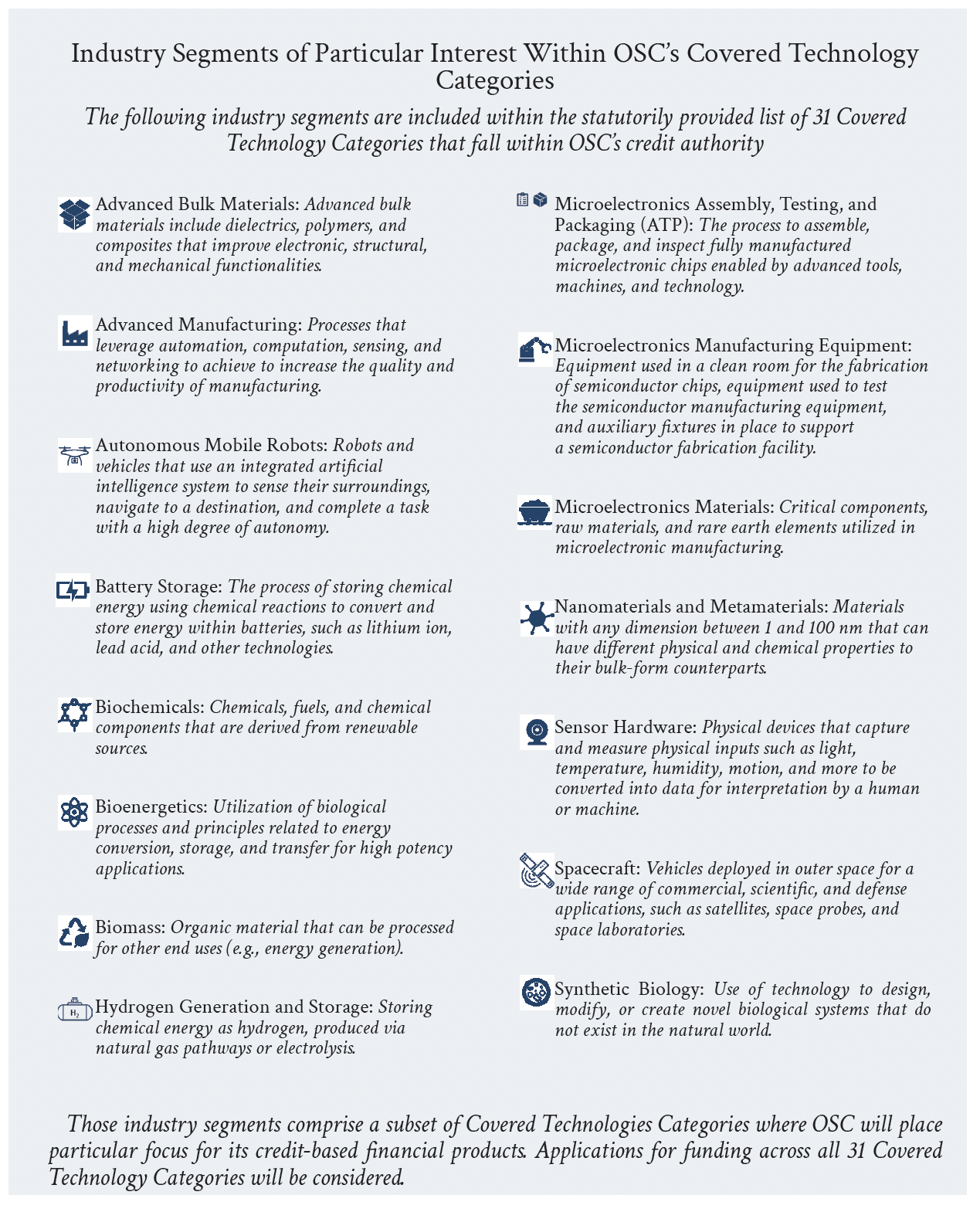
Even with successful R&D, many deep tech and component manufacturers stall out during capital-intensive scaling—a phase known as the technology “Valley of Death.” The Department of Defense established the OSC specifically to bridge this gap by crowding in private investment for critical component-level technologies (such as microelectronics, advanced materials, and bioenergetics).
Unlike traditional procurement contracts, the OSC deploys non-dilutive credit tools like loans and loan guarantees to finance commercial equipment and facility modernization. For an M&A buyer, a target that has secured low-cost, long-dated OSC debt financing has already scaled its manufacturing capability without drowning in dilutive equity rounds, making it an incredibly efficient acquisition target.
3. The Geopolitical Buffer: DFC and Cross-Border Infrastructure
For mid-market companies expanding into emerging markets across Africa, Latin America, or the Indo-Pacific, geopolitical and regulatory volatility can severely depress corporate valuation. The DFC directly mitigates this by providing political risk insurance, long-term direct loans, and equity investments. When a private operator is backed by the DFC, the risk of expropriation, currency inconvertibility, or sudden regulatory shifts drops dramatically. For a prospective cross-border buyer, this backing turns an otherwise fragile international project into a highly bankable, predictably structured asset.
The “Good Housekeeping” Seal: Institutional Quality and Validation
In M&A deal advisory, reputational alignment is a major value driver. A partnership with an elite US agency functions as a premium institutional endorsement—a “Good Housekeeping” seal of approval that resonates throughout global capital markets.
-
Scientific and Technical Validation: An award or contract from DARPA tells strategic buyers that a target’s scientific thesis has survived a brutal vetting process conducted by the world’s leading technical minds. It instantly separates a company from unverified competitors.
-
Supply Chain and Financial Viability: Vetting by the OSC ensures that a company’s hardware, component sourcing, and supply chains are secure, diversified, and strategically aligned with Western industrial standards.
-
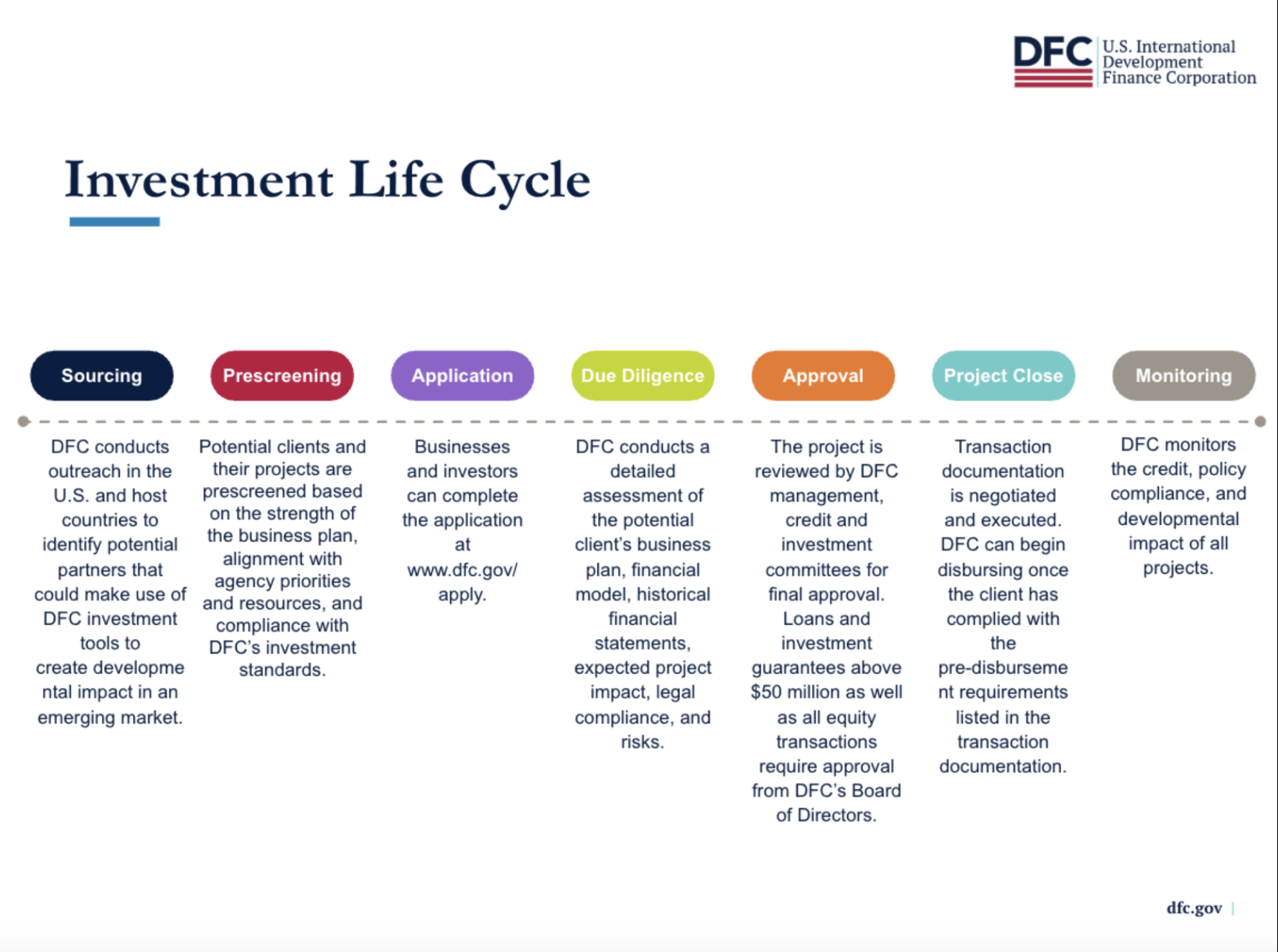
Rigorous Compliance Vetting: The DFC’s underwriting process mandates strict environmental, social, and corporate governance (ESG) compliance, alongside rigorous financial auditing. Passing this institutional gauntlet signals to institutional investors and private equity funds that the company’s internal controls are top-tier.
This built-in institutional credibility significantly cuts down the duration and friction of buyer due diligence during a transactional process, allowing deals to move toward a close with greater velocity.
Access to Elite Networks and Scalable Infrastructure
A company aligned with these agencies inherits structural advantages that are incredibly difficult to replicate through organic growth.
DARPA performers gain direct exposure to elite military, academic, and industrial networks, alongside access to world-class testing environments and classified datasets. This ecosystem has famously laid the groundwork for ubiquitous modern technologies, from GPS to advanced autonomous systems.
On the development side, DFC-backed entities operate with a layer of diplomatic leverage. The DFC coordinates closely with the U.S. Department of State, USAID, and local foreign governments. For a mid-market enterprise, this relationship provides invaluable bureaucratic air support when navigating complex local permitting, establishing cross-border joint ventures, or scaling regional operations.
The Strategic M&A Takeaway
From a corporate finance perspective, partnering with US agencies creates a highly scalable corporate blueprint. Component technologies anchored by the OSC and vetted by domestic defense frameworks frequently dictate the standards for broader commercial markets. Similarly, infrastructure or logistics models backed by the DFC create highly repeatable, de-risked frameworks that can be deployed across multiple international corridors.
For business owners planning an ultimate exit or a major capital raise, these agency relationships are not just operational milestones—they are premium valuation catalysts. By insulating a company from fundamental technical, capital-scaling, and geopolitical risks while offering an unassailable institutional endorsement, these partnerships position middle-market firms at the absolute top of the global M&A market.

- Italy’s battery gold rush: Energy storage creates a new market - September 29, 2026
- Bridging the Valley of Death: When MedTech Scale-Ups Should Choose Corporate Capital Over VC - August 30, 2026
- FUNR, Inc. Signs Letter of Intent to Acquire WE Green Energo GmbH, a 603.4 MW Balkan Solar & Wind Development Platform, in Reverse Merger Transaction - August 6, 2026